

CINEMAS SURVIVAL IN MALAYSIA

When we discussed about cinema, what will come across our mind was a dark room with big screen, loud sound system and big hall with crowds enjoying the movies. Cinema is well-known as family entertainment place with specific interaction for life experiences.
For a few decades ago, cinema create its own history and chronologies by many generations and stay sustain until today. Stating with originally open-air screening for community until World War 2, cinema concept develops to stand alone cinemas, cineplex, multiplex and now modernize to be become cultureflex. From the core spirit, cinema is designed for people.
Cinema owned by community. Based on the facts, our modern generation is creating the new philosophy where cinemas are not built for movies in total, but cinemas are design for community entertainment. The program has to change instead of screening all demands movie, the cinema activities need to versatile more to creative and community entertainment.
In the modern definition, it can’t be denied, cinemas are contributing to the economic growth for a country. From a very conservative definition where cinemas designed for entertainment and political platform during the pre-war era, the industry moved by evolution to economy development and become one of the leading industries in a country. Why can this happen? To really understand the structure, we must know the ground of this business behavior and what has to do with society. At the end of this segment, we will be able to prove, government help to make sure the survival of this industry is very much-needed.
Based on my earlier talk, explanation of this industry divided into 3 main ecosystems. There are production, distribution and exhibition. Cinema is categorized under the exhibition ecosystem. We have to agree that cinema is the front liner of this industry. Cinema is the bridging between industry product and market. The downfall of cinema will have a direct impact to the other ecosystem and the entire industry as well. When a pandemic hit most countries in the world, the cinema industry is among the most affected. It could be said that almost all cinemas in the world closed for almost 3 to 4 months and practically affected 2 to 3 months before the lock down started. Therefore, mathematically the business has affected for average 6 months. This calculation is not included the post pandemic situation. That is another chapter.
Let me brief the reasons why cinema is getting tough time during this hit. Before further, I want to clarify that this write-up is not to set aside the other ecosystem as I believe that all of us has own responsibility and role to industry. This writing is to offer a brief overview of the background of cinema development for everyone knowledge and understanding. As said, cinemas created and designed for community. Hence, any help demand from cinemas, must be seen to fulfill the community needs.
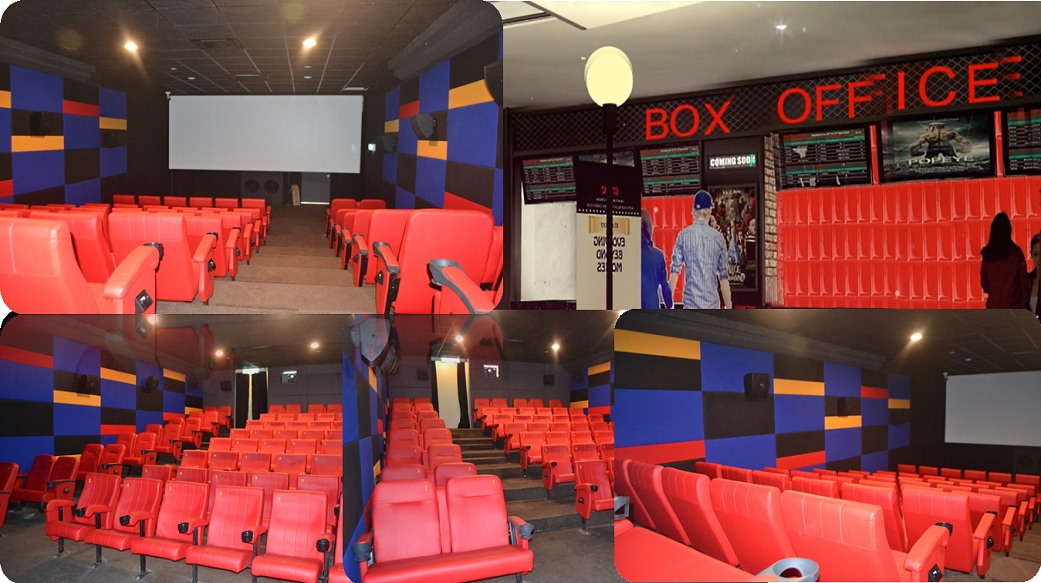
To build the cinema completely need advances and specific need. Other than high cost and expenses, the design has in line with the current technologies. With current standard, seating capacity around 100 to 250 seats for main town and 70 to 100 seats for small scales. But both serve the same purpose. For sharing note, estimated cost to build cinemas averages around RM 1.8 mil to RM 2.0 mil per screen including common area subject to technologies, facilities, design and ID materials. Return of investment (ROI) is around 5 years conservatively but for some cases, it could be more. The sustainable of cinemas business is not only depending on the programming line-up however, it also depends on other factors such as demography strength which related to behavior of surrounding community, mall services, seasons and other subsidiaries business. On the other hand, instead of colorful and shine surface, cinema business has faced many risks in their way to success. This is part of the reasons why the development of cinema has not accelerated compare to the other ecosystem in this industry. And the bigger challenge today, cinema face direct competition from alternative media such as video on demand, online platform and etc where it brings movie direct to our home. At the same time, the old enemy, movie piracy still there to grab our cake illegally with new trend and online concept. With all these threats, cinema is there to serve and struggling to compete.
Cinema in Malaysia And the Survival During Post Covid-19
Has similarities with other countries, cinema development in Malaysia is growing in line with the international cinemas’ performances. Well known as one of the encouraging markets and potential gross box office collections in Southeast Asia, Malaysia has shown very significant collection growth for the past 5 years before the pandemic period. Based on 2019 report published by National Film Development Corporation Malaysia (FINAS), gross box office is RM 1.08 billion with 77 million admission. The numbers of cinemas reported is 166 with 1,216 screens and 196,599 seating capacity. However, do note that the cinemas place in Malaysia is not covered the entire district in the country and mainly develop in key town with population per area around 100k and above, means the opportunity is there for cinema development to explore. The average of ticket prices is around RM 12.00 – RM 14.00. The price is still the cheapest compared to the other countries.
Based on the above statistic, the first question in mind, how it helps our Malaysia film industry? And how it helps contributing to our country economics? When we get this answer, then we know how important the cinema survival to us.
During the live streaming with the industry player on 8th May 2020 to discuss about Malaysia film industry survival during post Covid-19, I did mention about the best achievement for local titles under mandatory scheme FINAS where our collections for 2019 was RM 134 mill compare to RM 128 mill on 2018. Numbers of titles release for 2019 was 45 and 2018 was 50. Meaning, our local film industry strength, contribute from 10% to 13% compared to the total gross box office collections for the country. Theoretically, it is still lower compared to the other neighbor countries where their industry achievement reported reached 15% to 30%. We will be there to get the percentage and our industry is capable to make it based on the current response from the audiences. Before the pandemic, we believed through all effort given and plan, the collections estimated better on 2020 based on the line up approved under the scheme however the pandemic kill the wave for the year. This is really out of plan but it is not the end.
Back to the questions, where this figure came from and how it is generating? It comes with plan and proper structure including effort given from all parties including the cinemas team. Our experienced, cinemas effort is always not in the picture when great box office numbers achieved but always get the first bullet when film collections are down. This is natural perception without any purpose but this syndrome of wrong perception has to remove for healthy understanding of industry communication.
When we talked about contributing to country economics, cinemas are the key platform in industry business. A part of that, cinemas give interesting career and job opportunity for local people. By looking as most cinemas halls averages 8 to 12 screens, numbers of staffs for both type full timer and part timer can reach to 80 to 100 staffs per cinemas. The beauty of this is most of the cinema staffs are all Malaysian. Please stand in front of cinema box office, watch the staffs preparing our foods at concessions, see the person standing at steward checkpoint, see the usher who guide us to the hall, they are all Malaysian. In fact, cinemas are the most popular sector for our youngsters.
And the major contribution to our economy where the local authorities will be enjoying the collecting of 25% entertainment tax of every ticket price sold. For the said tax, estimated contribution to the state government for 2018 and 2019 was almost RM 250 million for each year and this numbers are estimating increase subject to growth numbers of cinemas across the country. But now, our cinemas are weak and need hand of assistance. We really hope that government will count cinemas in, when economic stimulus package being discussed and plan.
FINAS Act 244: The spirit Of the Act

When National Film Development Corporation Malaysia (FINAS) set up in 1981 under FINAS Act 244, one of the objectives are to manage all 3 said ecosystem in Malaysia film industry. FINAS is not created to protect selected sector in the industry, FINAS has designed to protect all the stakeholder under their licenses. Our industry leader earlier believed, to develop and make our film sector become the real industry, all the ecosystem need to mapping with same tune to ensure the development flow will work into the same direction. If this is achievable then the community under this umbrella will grow up and protected. Unfortunately, it is sad to say that, after 39 years, we still struggling to reach the destination. In real factor, we are still there and move with slow-moving. No one will be blamed cause this happen and now we just need to increase our energy to speed and reach the real time. The most important, we must see the future.
Hence, to brighten up the spirit of the act, all responsible agencies should look into how to develop the ecosystem by structuring industry economic stimulus package which involve all respective parties. We need a fresh start.
When YAB Prime Minister announced on June 2020 for short-term back up package and one of them was creative industry fund RM 225 million for the local film and TV maker, of course, it was a great news for our industry players. We wish that fund will really help our players to move on with their creative idea and activities. That part was perfectly done. And now, we are waiting our term to hear cinema package from government. The package is needed to at least to let us run with the same energy as before. The government can look into several area to look into. Of course, funding or grant is much appreciate but bridging fund with same concept as film maker package can also be considered. In the other note, was mentioned on my earlier write up, the state government should look to abolish the entertainment tax 25% or at least cut it to lower as can. This will be helping the industry indirectly and cover all loses during the lockdown and at the same time, secure the business in long run. The benefit will go to all parties including the authorities.

Finally, development structure and economic plan for cinemas, should be one of the agenda when drafting 12th Malaysia Plan (RMK12) for 5 years. The information on what our needs should be reached the ministry and brief the entire need. Cinema operator must aware that they have right to demand as they are part of it. Cinemas association must work in the system together with the government agencies. Until today, most of industry scheme especially in FINAS focusing more on development of film making and human skills. Fund allocation in million benefiting the industry through Dana Kandungan Digital (DKD) to encourage our film maker initiated of making film besides other fund for Marketing, PSA and Micro Fund. All these funds categorized as grant status, which given by yearly basis under 11th Malaysia Plan (RMK 11) and reward for those who entitles after fulfill the process of selection procedures. In added, the local produces also enjoying the special rewards under the same plan called Insentif Tayangan Filem Careka (ITFC) whereby, a cash reward will be given to the producers up till RM 500k based on the box office performances in local cinemas. Thank you very much to the government for these incentives and personally, I really hope this scheme is remaining and continued in the next plan for benefiting our film makers.
However, just a point of suggestions, going to 40 years of FINAS, this is the best for our industry leaders to think and include special incentive for cinemas for the next 5 years under 12th Malaysia Plan (RMK12). With remaining of DKD and ITFC for local film makers, we hope that the next plan, other scheme will be developed for cinemas benefit related to development such as Cinema Development Fund (CDF), Cinema Marketing Incentives (CMI) or Community Cinema Loan (CCL). These incentives will definitely help our existing cinema chain to sustain and perhaps to develop young entrepreneur involve in this culture.
Hope this time, the bright still there for cinemas. Cinemas are officially able to run on 1st July 2020. In the meantime, cinemas hope government is hearing our voices asking for assistance.
Cinema have social and economic responsibility to industry, community and country.
Written by Onn Norshal Hamzah, 28th June 2020